Powers Health cardiovascular experts lead the way in minimally invasive advancements
Powers Health has established itself as a leader in cardiovascular innovation in Northwest Indiana and in the state, frequently introducing minimally invasive procedures and advanced technologies.
Here is a look at some of the groundbreaking procedures and firsts at Powers Health:
Structural Heart
Transcatheter Aortic Valve Replacement (TAVR)
TAVR is a less invasive option for the treatment of aortic stenosis. It saves patients from the rigors of a complex open-heart procedure and provides quicker recovery.
The Powers Health Structural Heart and Valve team was a pioneer of the TAVR program and is one of the most experienced in the Chicagoland area. During the procedure, a new valve is delivered through a small incision in the groin area or chest and passed through an artery to the heart. The new valve takes over the job of regulating blood flow.
TAVR is performed in Community Hospital’s state-of-the-art hybrid operating room equipped with advanced video integration technology that aids the team in real-time imaging and continual medical assessment.
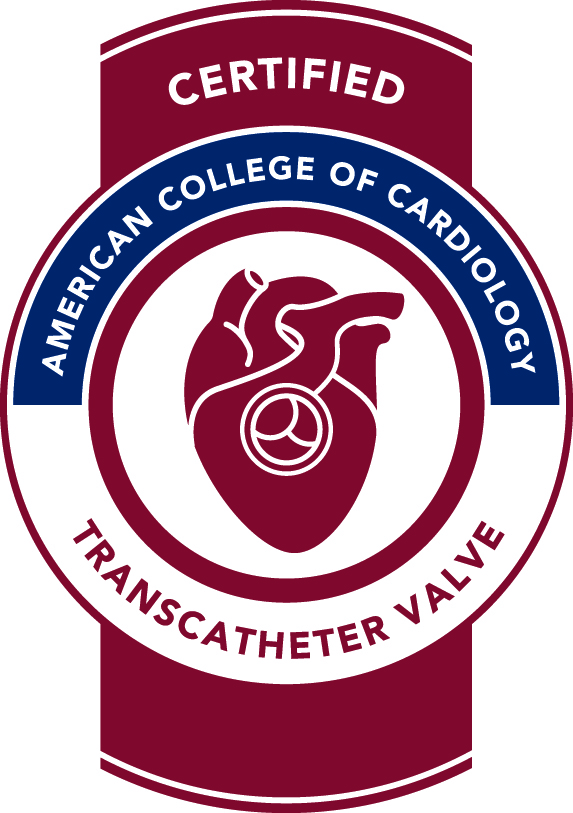
Community Hospital has been awarded the American College of Cardiology’s Transcatheter Valve Certification based on evaluation of the staff’s ability to meet standards for multidisciplinary teams, formalized training, shared decision-making and registry performance.
TEER is an option for people with often debilitating tricuspid regurgitation, where the valve between the right ventricle and right atrium does not close properly, allowing blood to flow backward into the right atrium, forcing the heart to work harder to move blood to the body. Symptoms of the disease may include abnormal heart rhythms, fatigue, shortness of breath and swelling in the abdomen, legs and neck veins. Left untreated, tricuspid regurgitation may lead to other conditions, such as atrial fibrillation (AFib) or heart failure. During the procedure, the TriClip device is delivered to the heart via the femoral vein. Once in place, it clips together a portion of tricuspid valve leaflets to reduce backward blood flow.
Tricuspid Valve Replacement (TTVR)
The Structural Heart team at Powers Health continues to offer groundbreaking heart valve replacement procedures with for patients with severe symptomatic tricuspid regurgitation. The EVOQUE system is the world’s first TTVR device, designed to improve the quality of life in these patients without the need for open heart surgery. The device is threaded through the femoral vein to the heart and deployed in the valve, fully replacing the weakened area without removing the valve to eliminate the backflow of blood.
Heart Failure
Cordella Heart Failure System Implant
In January 2026, Powers Health completed its first Cordella Heart Failure System implant. The implant, by Edwards Lifesciences, helps patients who have heart failure by measuring their pulmonary artery pressure and vital signs from the comfort of home and allowing clinicians to access that data remotely.
Peripheral Artery Disease
Percutaneous Transmural Arterial Bypass (PTAB)
PTAB is an effective option for patients with lower extremity peripheral artery disease (PAD). This is geared for PAD patients who have not improved with other interventions, such as a stent, or are not good candidates for open surgical bypass.
The PTAB procedure creates a new pathway for blood flow using the patient’s femoral vein to bypass long, complex blockages in the arteries of the leg. It carries a lower rate of complications and infection than open surgical bypass, and patients typically spend one day in the hospital.
Left untreated, PAD may cause pain or loss of mobility and may increase a person’s risk for stroke, heart attack and coronary artery disease.
TransCarotid Artery Revascularization (TCAR)
TCAR treats carotid artery disease and prevents future strokes. This direct transcarotid stent placement option provides best-in-class neuroprotection in a more-efficient and less-invasive approach compared to traditional carotid endarterectomy (CEA).
Like CEA, the TCAR procedure involves direct access to the carotid artery, but through a much smaller incision – creating just enough room to place a stent directly into the carotid artery to stabilize the blockage. This clinically proven procedure is unique in that blood flow is temporarily reversed so any plaque debris that may break off is diverted away from the brain, preventing a stroke.
Atrial Fibrillation
Pulsed Field Ablation
Pulsed field ablation delivers targeted electrical pulses to treat areas of heart tissue that cause AFib. In a traditional ablation, extreme heat or cold is applied via catheter to areas of the heart associated with abnormal heart rhythms. The new approach uses electric fields to treat those areas of the heart. This non-thermal approach is proven to be an effective option for patients while minimizing the risk of damaging surrounding tissue, compared to traditional ablation.
Left Atrial Appendage Occlusion (LAAO) – WATCHMAN FLX
People diagnosed with non-valvular AFib are at higher risk for stroke. These patients typically are prescribed blood thinners to reduce that risk. WATCHMAN FLX is an alternative to reduce the risk of stroke while reducing the risks associated with taking blood thinners. WATCHMAN FLX is a one-time, minimally invasive implant that blocks the left atrial appendage to eliminate the source of most AFib-related clots.