
MONDAY, Oct. 19, 2026 (HealthDay News) — If you’ve ever needed two trips to get the groceries in from the car or felt winded after a flight of stairs, you’ve already seen why everyday strength matters.
That’s where functional strength training comes in. Instead of isolating a single muscle the way a biceps curl does, functional moves work several joints and muscle groups together, the same way your body moves in daily life, according to the Cleveland Clinic.
“Any movement that matches something you do in your day-to-day life can be considered functional,” physical therapist Justin Nessel said in a Cleveland Clinic article. “What matters is improving your ability to do the things you need to do without burden.”
That strength gets harder to hold onto with age. “Loss of muscle starts at around age 25 if you’re not doing something to offset it,” Nessel said. Functional training can help slow that process and may help you stay independent as you get older.
Adults should do strength-training exercises at least 2 days a week, according to the Physical Activity Guidelines for Americans from the U.S. Department of Health and Human Services.
You don’t need a gym to get started. TJ Mentus, a certified personal trainer and Garage Gym Reviews expert panelist, shared his top five functional strength training moves for a beginner-friendly workout you can do at home.
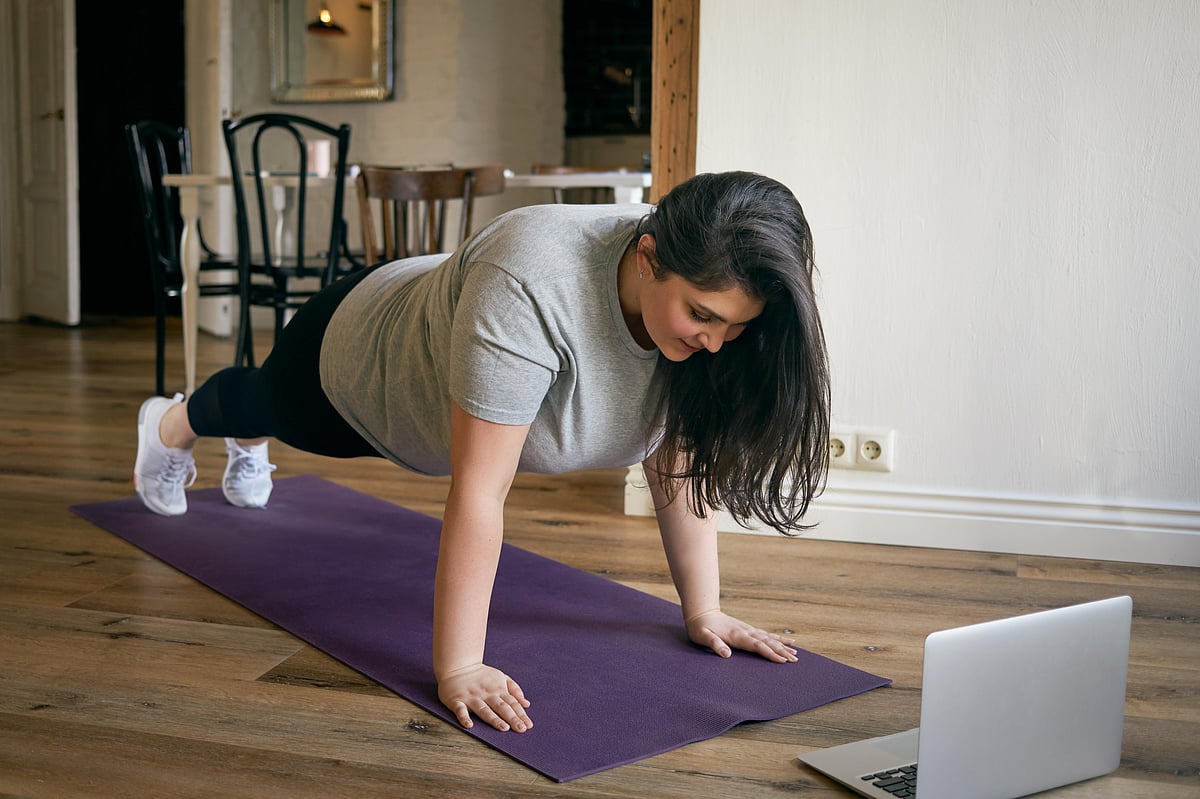
The inchworm is a full-body movement that mainly works the arms and core, and it can also help with shoulder mobility. This is a great warm-up exercise to get the whole body moving.
How to do inchworms:
Start from a standing position and bend down to reach your hands to the ground.
Walk your hands out until you are in a straight-arm plank position with your hands under your shoulders and your body in a straight line.
Walk your hands back to your feet and stand up. Try to take 4 to 6 steps total with your hands each time.
Start with 2 to 3 sets of 5.

The hand-release push-up is a good option for beginners because it encourages full range of motion and is less time under tension for the upper body than a traditional push-up.
How to do hand-release push-ups:
Start from a plank position with your hands slightly wider than shoulder width and your core tight to help maintain a flat back.
Lower your chest down to the ground in a controlled manner by bending your elbows back toward your body.
When your chest touches the ground, lift your hands up off the ground by pinching your shoulder blades together.
Place your hands back on the ground and in one motion push your chest and body off the ground to return to the plank position.
If this is too difficult, perform this exercise from your knees.
A good goal to work up to is 3 sets of 15 to 20 reps.
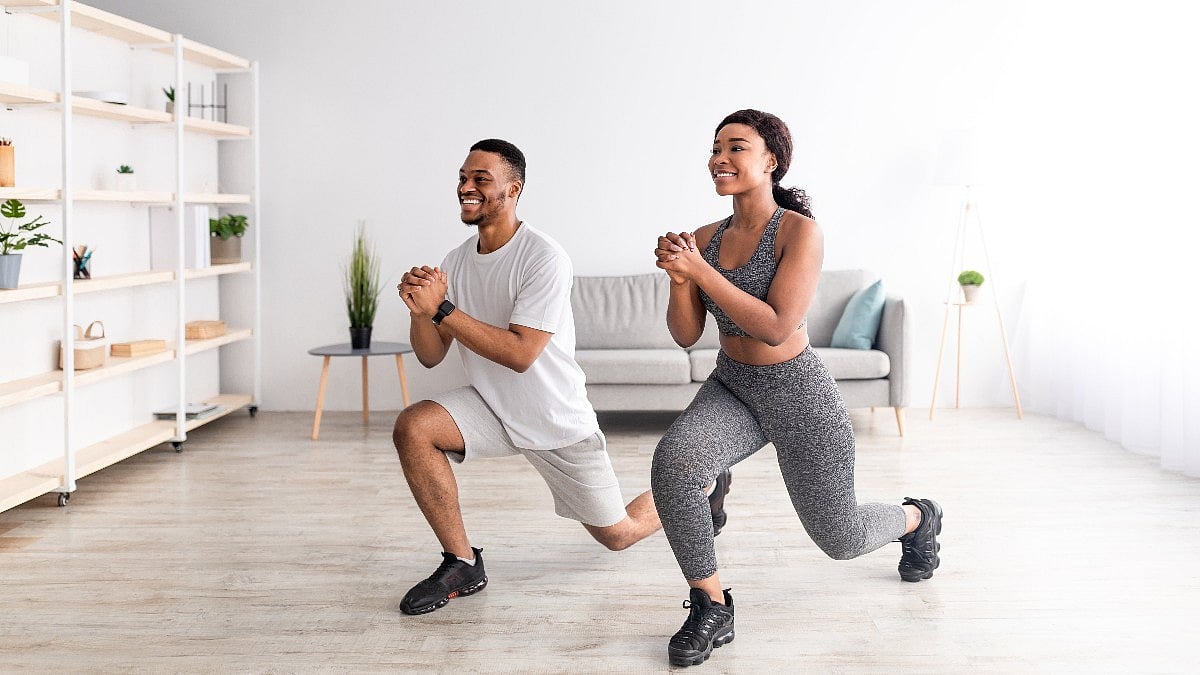
Reverse lunges are great for strengthening the lower body, and for beginners, just bodyweight alone can still offer plenty of resistance.
How to do reverse lunges:
From a standing position, step one foot back about two feet behind you.
Gently lower your back knee to lightly touch the ground.
Once it makes contact with the ground, press through your front heel and drive your hips forward to return to standing.
Repeat on the other leg. Make sure that when you’re in the lunge position your front knee is over your heel and your back knee is directly under your hips so they make 90-degree angles.
Perform 3 sets of 8 to12 each leg.

The straight-leg sit-up is a variation on the standard sit-up that’s a bit safer for the back, and from a functional perspective, it helps to improve your ability to get up off the ground and strengthen your core.
How to do straight-leg sit-ups:
Start by lying on your back.
Reach your arms up toward the ceiling and pull with your abs to lift your upper body up to a seated position.
As you sit up, keep your arms raised toward the ceiling.
Lower back down to the floor in a controlled manner.
Start with 3 sets of 10.
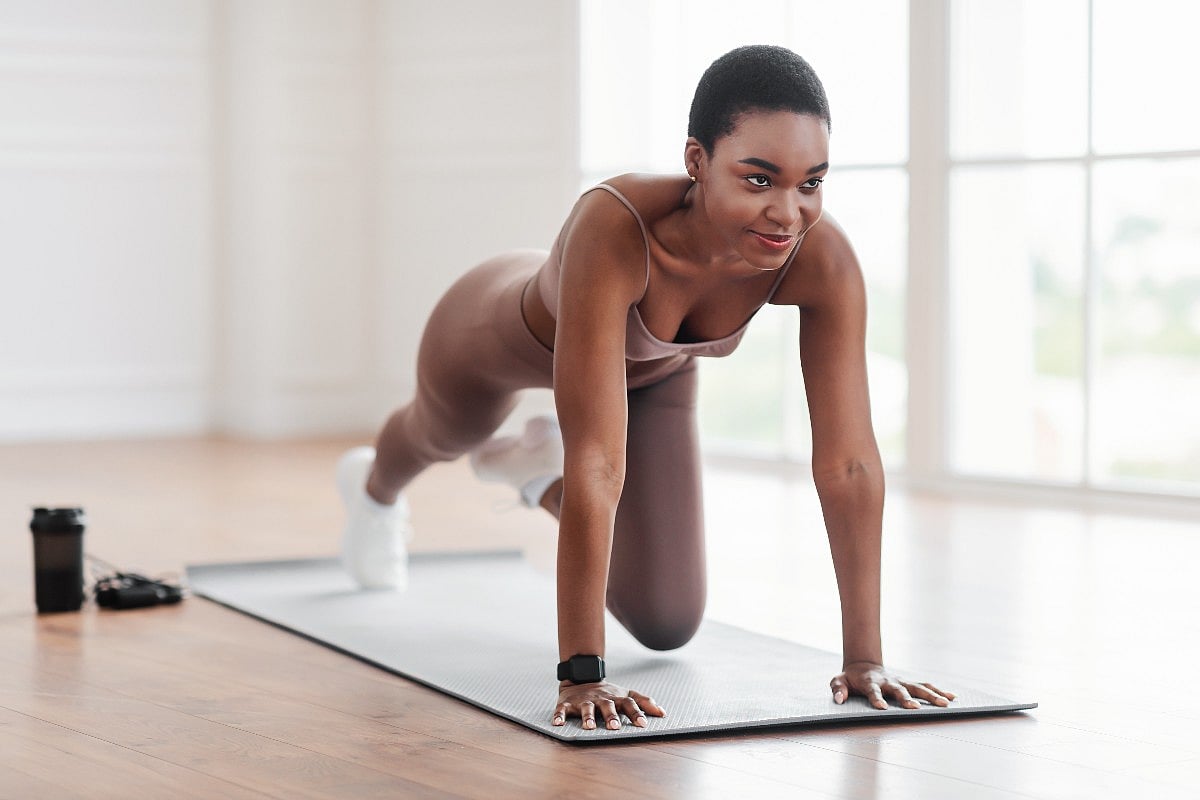
The mountain climber is a good core exercise that can be used to build up cardio endurance because it can significantly increase your heart rate.
How to do mountain climbers:
Get in a straight-arm plank position.
Bring one knee forward into your chest. Then, bring your other knee into your chest as you bring the starting foot back so that you’re switching off between each leg. This movement will require your feet to briefly be off the ground at the same time.
Continue alternating switching legs.
If this is too difficult, try moving just one leg at a time.
Try this in a tabata format for a short high-intensity interval training (HIIT) workout. Do 8 rounds of 20 seconds of mountain climbers and 10 seconds of rest (4 minutes total). The goal is to go as hard as you can in those 20 seconds and get in as many reps as possible.
More information
Visit the Centers for Disease Control and Prevention for more information about physical activity.
SOURCES: Interview with TJ Mentus, 2024; Cleveland Clinic, April 9, 2026
Copyright © 2026 HealthDay. All rights reserved.